Zero Hunger Innovation Project: Cultivating Change in the Somali Region
Hinjabi Farming Area, Dagale, Fafan Zone, Somali Regional State, Ethiopia
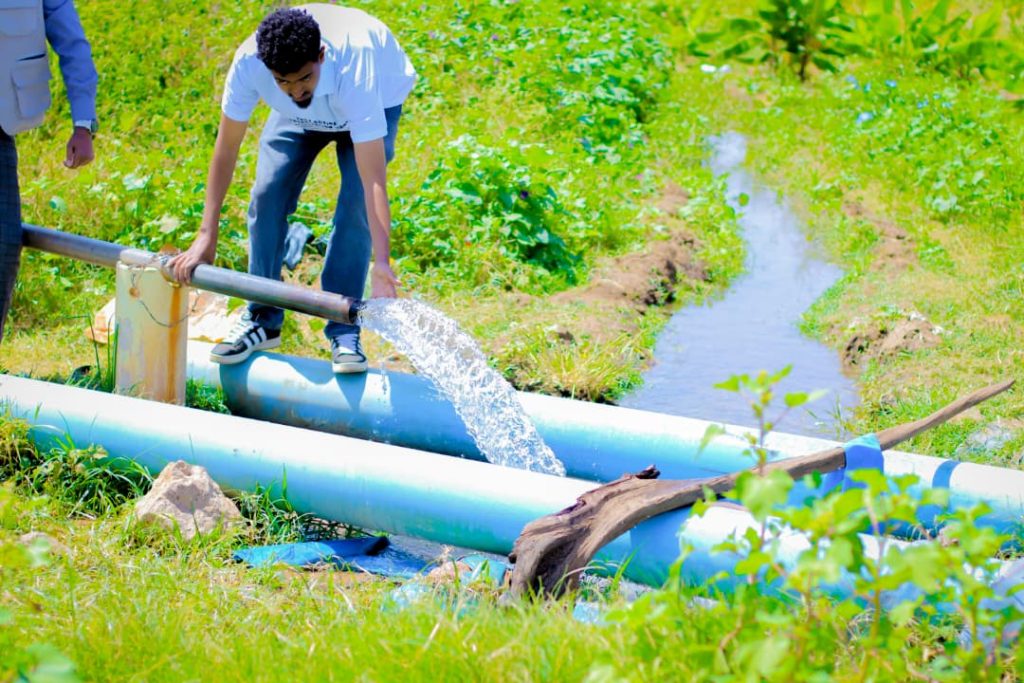
The Zero Hunger Innovation Project, led by East Action Organization (EAO), is breathing new life into the Hinjabi Farming Area. Once barren and unproductive, these lands now yield onions, papayas, and maize—grown and managed by women and youth who are redefining their futures through sustainable agriculture and beekeeping.
This initiative supports over 5,000 community members, the majority of whom are women and young people. They work together to grow food, raise livestock, and produce honey, transforming traditional farming into a sustainable and dignified livelihood. Youth are trained in various fields, including apiculture, honey processing, irrigation, and cooperative management, building a foundation for resilience and economic opportunity across the region.
Rooted in both Legacy and Modern Efforts
The project builds upon the 1999–2000 WFP–FAO–BoANR drought recovery initiative, which introduced small-scale irrigation, soil conservation, and food-for-work schemes in the Somali Region. Those early actions helped establish a culture of resilience and food security. Today, EAO extends that legacy, aligning with ongoing efforts by WFP, FAO, and the Bureau of Agriculture to promote climate-smart agriculture, beekeeping, and youth-led innovation.
The project connects past and present by evolving from food-for-work programs to income-generating enterprises, from emergency response to long-term resilience, and from donor-dependent support to community-owned innovation. It complements national strategies such as Ethiopia’s Productive Safety Net Programme, the Food Systems Transformation Roadmap, and the Zero Hunger by 2030 vision.
Challenges and Opportunities Ahead
Despite the progress, challenges remain. Water scarcity continues to limit productivity, as many areas depend on distant wells and minimal irrigation. Beekeeping operations face shortages of essential equipment, and high costs along with limited solar energy access hinder growth and employment. Nearly half of the available farmland remains unused due to limited resources.
To realize the full potential of the project, EAO aims to mobilize USD 120,000 in total funding. Of this, USD 55,000 has already been raised through private partnerships, member contributions, and community participation—leaving a shortfall of USD 65,000.
With additional support, the project will provide efficient drip irrigation systems, solar power installations, beekeeping equipment, and livestock training programs to enhance productivity and year-round livelihoods.
A Call for Partnership
East Action Organization invites development agencies, private foundations, CSR programs, and individual philanthropists to join hands in expanding this initiative. Every contribution, whether financial or material, directly supports women and youth, strengthens food security, and creates sustainable jobs in one of Ethiopia’s most climate-affected regions.
Together, we can cultivate hope, dignity, and prosperity—advancing the shared mission of achieving Zero Hunger. Join EAO in transforming rural challenges into opportunities for lasting change and building a future where every family can thrive.
For Partnership and Inquiries
East Action Organization (EAO)
Email: info@eastaction.org
Phone: +251 252 78 07 08 | +251 901 222 224 | +251 915 330 907