From Primitive Humanitarianism to the Humanitarian System Reset 2025
A New Era of Simplified Coordination and Local Leadership
Approved by the Inter-Agency Standing Committee (IASC) – 17 June 2025
Shared by East Action Organization (EAO)
Introduction
Humanitarianism has evolved from simple acts of compassion into a global coordination system uniting governments, NGOs, and international agencies. The latest milestone came in June 2025, when the Inter-Agency Standing Committee (IASC) approved the Humanitarian System Reset 2025 — reducing global clusters from 11 to 8. This marks a historic shift toward a simpler, inclusive, and locally driven humanitarian framework.
From Compassion to Coordination
In early societies, survival depended on mutual aid — sharing food, caring for the sick, and protecting one another. Over time, compassion became institutionalized through faith and culture: Zakat in Islam, almsgiving in Christianity, and Ubuntu in African philosophy all emphasized duty to others.
The 19th century introduced organized humanitarianism, led by the International Committee of the Red Cross (ICRC) and the Geneva Convention (1864), which established the principles of humanity, neutrality, impartiality, and independence — the moral foundation of modern humanitarian action.
After the World Wars, the League of Nations evolved into the United Nations (UN), creating agencies like UNICEF, WHO, WFP, and UNHCR, marking the birth of a structured global humanitarian coordination system.
The Cluster System and Its Evolution
In the early 2000s, the UN formalized coordination through the Cluster Approach, designating lead agencies for each sector.
Before 2025, there were 11 global clusters and 4 Areas of Responsibility under Protection, covering areas like child protection, GBV, and mine action.
While the system improved coordination, it also became complex and fragmented — slowing response and limiting local participation.
Humanitarian System Reset 2025: From 11 to 8 Clusters
The 2025 IASC reform streamlines global coordination into 8 integrated clusters to enhance efficiency and local ownership:
1️⃣ Protection – UNHCR, UNICEF, UNFPA, UNMAS
2️⃣ Shelter/NFI/CCCM – UNHCR, IOM, IFRC
3️⃣ WASH – UNICEF
4️⃣ Health – WHO
5️⃣ Nutrition – UNICEF
6️⃣ Food Security – WFP & FAO
7️⃣ Education – UNICEF & Save the Children
8️⃣ Humanitarian Operations Support – WFP & UNDP
Why It Matters
The Reset is more than structural — it’s a philosophical renewal emphasizing:
✅ Simplified coordination through unified tools and processes
✅ Stronger leadership of national and local NGOs
✅ Transparency and equitable participation
✅ Faster and more accountable emergency response
EAO: Local Leadership in Action
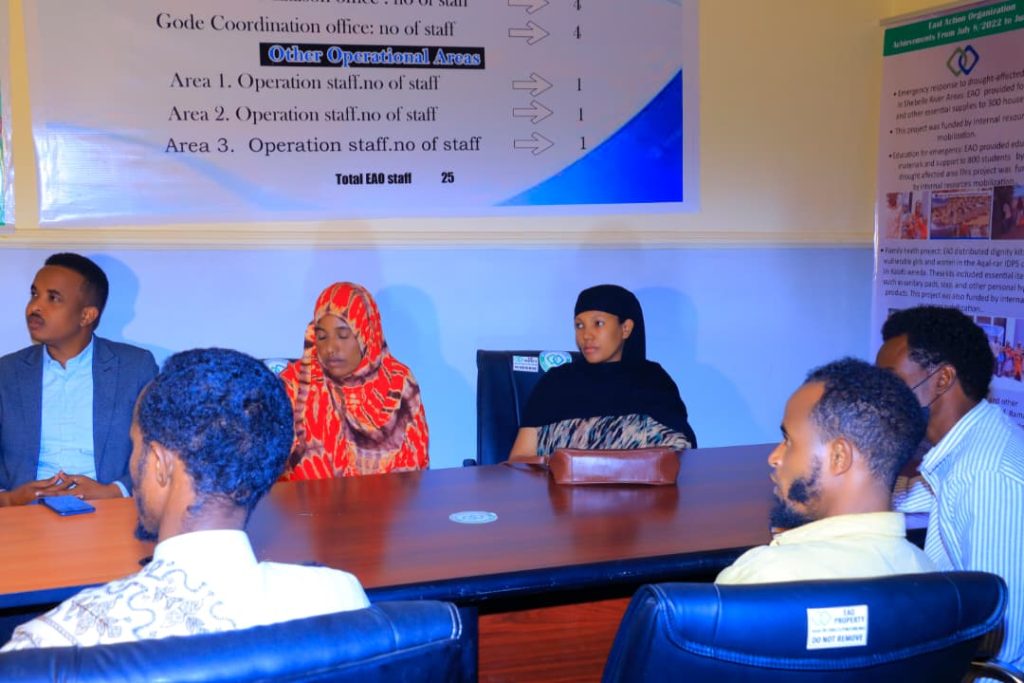
In Ethiopia’s Somali Region, East Action Organization (EAO) is aligning with the new framework by:
• Integrating the 8-Cluster Model into its programs
• Training staff on the Protection Cluster’s inclusive approach
• Partnering with women-led and disability organizations
• Strengthening coordination with OCHA Jigjiga Sub-Office
EAO exemplifies what the Reset envisions — humanitarian action led locally, supported globally, and united by purpose.
Conclusion
From primitive compassion to institutional reform, humanitarianism has always centered on dignity and solidarity. The Humanitarian System Reset 2025 renews that vision — building a system that values local leadership, community trust, and global collaboration.
EAO proudly advances this transformation across the Somali Region, championing a humanitarian response that is local by leadership and global by support.
#EAO #HumanitarianReset2025 #IASC #Localization #SomaliRegion #UNHCR #UNICEF #OCHA #WFP #WHO #FAO #UNDP #IFRC #SaveTheChildren #HumanitarianAction