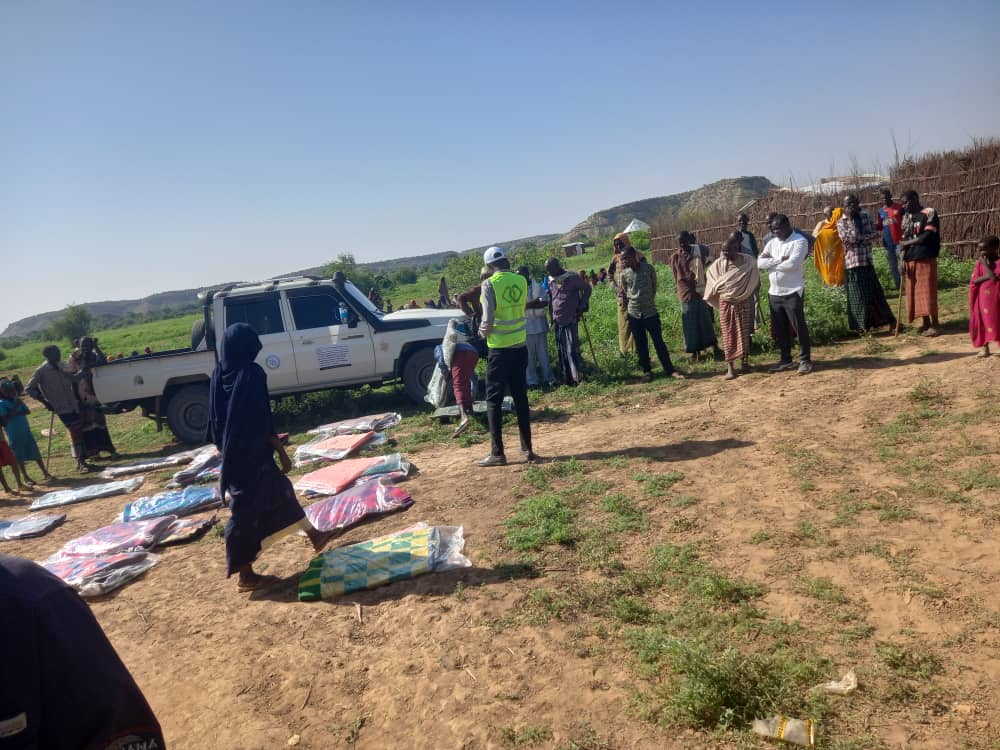
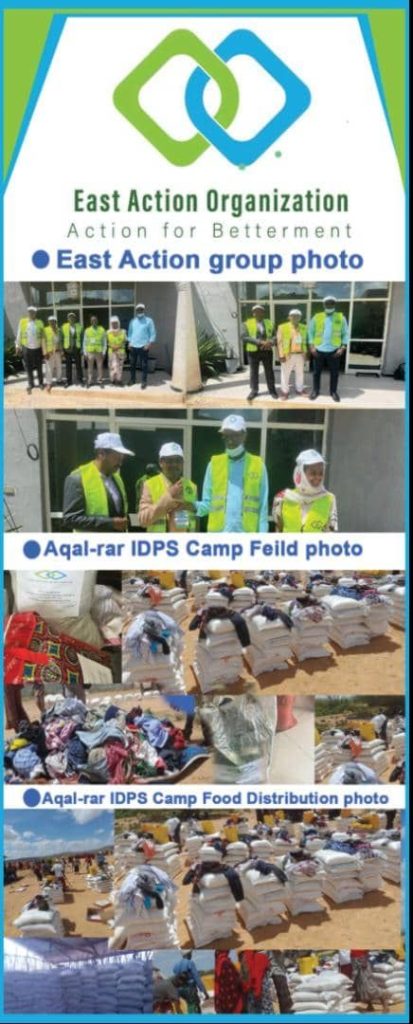
Title: Unified Narrative Report and key Achievement It highlights the key achievements target communities, and impact of EAO’s interventions. You can further tailor this report by adding specific details, figures, or quotes from relevant sources. Ethiopia is the third largest refugee hosting country in Africa, home to over 954K refugees and asylum seekers—mainly from South Sudan, Somalia and Eritrea. Following the recent outbreak of armed conflict in Sudan (April 2023) and Lascanood Somalia (February 2023), Ethiopia is receiving thousands of forcibly displaced people at several points of entry. UNHCR and the Government of Ethiopia through the Refugees and Returnees Service (RRS), in partnership with regional authorities, other UN agencies and NGOs are working to provide safe asylum access, documentation, protection and solutions to those who need humanitarian support. The majority lives in 24 refugee camps established across five regional states. Over 70,000 others also reside in the capital Addis Ababa as urban refugees. 47% of the refugees are women and girls, while 59% are children. In addition to this According to national displacement report As of June 2023, 4,385,789 IDPs and 872,483 IDP households were internally displaced across 3,393 assessed, accessible sites in Ethiopia. Somali region hosts the highest number of IDPs primarily displaced by drought nationwide (542,807 individuals or 66.94% of national drought caseload) With 665 site and No. of IDP individuals 1,321,684 .% of IDP individuals is 30.14% mainly displaced by drought and conflicts this is the highest figure in Ethiopia hosting the most vulnerable people among IDPS Camps in Ethiopian. IDPS can be A person or groups of persons who has been forced or obliged to flee or to leave their homes or places of habitual residence, in particular as a result of or in order to avoid the effects of armed conflict, situations of generalized violence, violations of human rights or natural or human-made disasters, The recent rain in October to December 2023, in the Somali region has been heavily impacted 2. Project Response and Over view Emergency Response: During the reporting period, EAO intervened in four key locations: Mirqaan refugee camp: Provided food items (rice, wheat flour, cooking oil, and dates) to 300 vulnerable families. Qoloji IDP settlement: Distributed food items and basic dignity kits (menstrual pads, soap, underwear, detergent, etc.) to 300 households, including 75 adolescent girls and women. Aqal rar IDP camp: Delivered food items to 300 families. Direy and Sigadhere flood-affected IDPs: Provided core non-food items and dignity kits to 300 households 3.Key Highlights: Supported over 3,300 individuals: EAO’s interventions reached 3 IDP sites and 1 refugee camp, providing critical aid to a total of 3,300 individuals from the most vulnerable groups. Multi-faceted assistance: Their support encompassed various essential items, including: Food: Rice, wheat flour, cooking oil, and dates for 900 families across 3 locations. Non-food items: Core relief supplies for 300 flood-affected IDP households in Direy and Sigadhere. Dignity kits: Essential hygiene kits for 300 adolescent girls and women across all 4 sites. Geographical reach: EAO’s interventions covered sites in Doolo zone (Mirqaan refugee camp), Fafan zone (Qoloji IDP settlement), Shebelle zone (Aqal rar IDP camp), and East Emay District (Direy and Sigadhere flood-affected IDPs). Financial commitment: The organization dedicated over 4.5 million Ethiopian birr from its internal resources, primarily funded by private companies and member contributions. 4 EAO .Impact and Achievements EAOs interventions directly benefited over 1,200 individuals, including families, women, and children, in the targeted locations. They provided essential food supplies, hygiene items, and dignity kits, addressing critical needs and promoting well-being. Funding: EAO’s support for refugees and IDPs is funded through internal resources, mainly contributions from private companies and members. This commitment demonstrates their dedication to supporting their communities despite resource limitations. Conclusion: East Action.s achievements showcase their commitment to alleviating the suffering of refugees and IDPs in Ethiopia. Their timely interventions provided essential aid to vulnerable communities, demonstrating the impact of local organizations in addressing humanitarian challenges. East Action’s timely and targeted interventions have provided much-needed relief to vulnerable communities facing food insecurity, displacement, and hygiene challenges. Their efforts have contributed to alleviating suffering and promoting dignity among refugees and IDPs in Ethiopia.