Field Report: East Action Organization-Owned Community Support Project
Project Overview
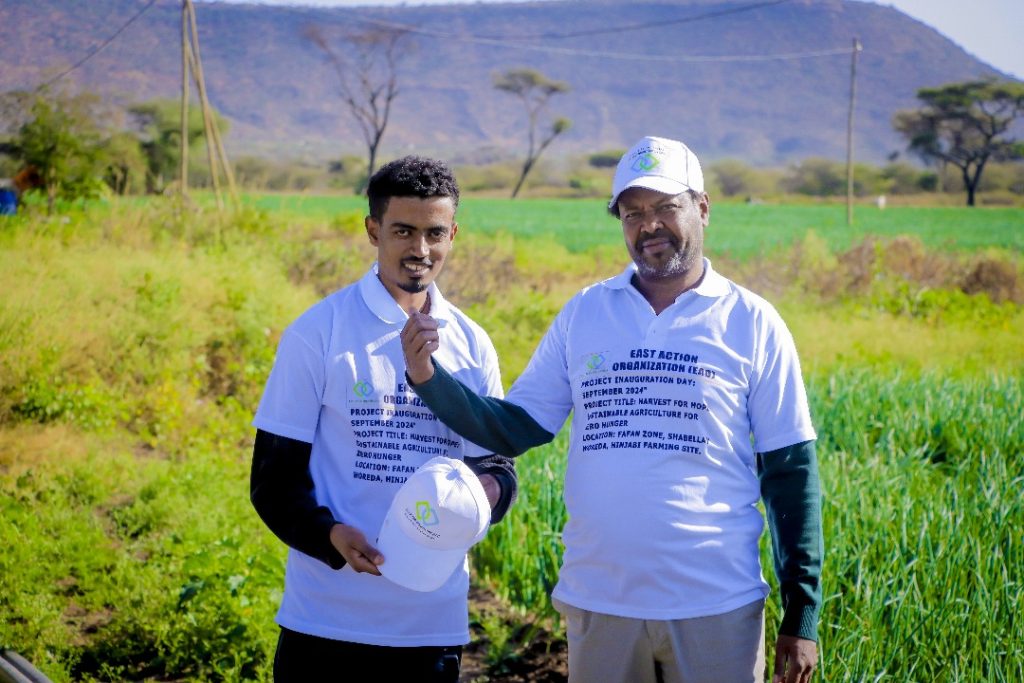
The East Action Organization proudly owns and operates this sustainable farming initiative, designed to support local communities and marginalized populations in the Fafan Zone, Somali Regional State, Ethiopia. Located at the Hinjabi Farming Area in Shabelle Woreda, this project empowers local farmers through innovative agricultural practices while addressing food security and promoting resilience.
Objective
The primary objective of the project is to establish a sustainable farming system that enhances agricultural productivity while prioritizing the needs of the community. By focusing on local food production and equitable distribution, the initiative ensures that harvested yields directly benefit community members, especially those experiencing food insecurity or social marginalization.
Key Features
1. Community Ownership
While owned by the East Action Organization, the project is implemented in collaboration with local stakeholders to ensure inclusive decision-making, shared responsibility, and community empowerment.
2. Sustainable Practices
The project employs eco-friendly farming techniques to improve soil fertility, conserve water, and protect biodiversity, creating a model for long-term environmental stewardship.
3. Harvest Distribution
A structured distribution system ensures that harvested produce prioritizes local farmers, their families, and vulnerable groups, including marginalized populations, fostering food equity in the community.
4. Capacity Building
Farmers participate in regular training sessions and workshops, equipping them with advanced agricultural knowledge and sustainable farming methods to boost productivity and resilience.
5. Social Equity
The project integrates marginalized communities into all phases of planning and implementation, addressing disparities in resource allocation and improving their access to food and livelihoods.
Impact
Since its inception, the initiative has significantly enhanced food security in the region, increasing the availability of locally produced food while promoting community cohesion. By prioritizing support for marginalized groups, the project has strengthened social equity. Additionally, its sustainable approach ensures enduring benefits for the environment and local livelihoods.
Current Challenges
The project currently faces several operational challenges, including:
Water Pump Issues: Interruptions in water pump functionality are affecting irrigation efficiency.
Electromechanical Constraints: Maintenance and reliability of essential equipment remain problematic.
Labor Costs: Rising labor expenses are straining the project’s operational budget.
Future Directions
The East Action Organization is committed to addressing these challenges while scaling up the initiative by:
Expanding the project to include additional marginalized groups in neighboring areas.
Diversifying crop production to improve nutritional variety and food security.
Strengthening the capacity of local communities to manage the farming system independently over time.
This project stands as a testament to the East Action Organization’s dedication to fostering sustainable development, food security, and social equity in the Fafan Zone.
Team Members
1.Siraj Aden Hassen
2.Natnael Tlahun
3. Cumar hassan
4.Yarred kasahun