Final Narrative Report
Title: Empowering Youth Advocates: Training for Leadership in SRH and GBV Prevention
- Introduction
- Target Group
- Organizer and Venue
- Training Activities
- Outcomes and Impact
- Challenges and Lessons Learned
- Conclusion and Recommendations
- Evidence and Photos
Final Narrative Report
Title: Empowering Youth Advocates: Training for Leadership in SRH and GBV Prevention
1. Introduction
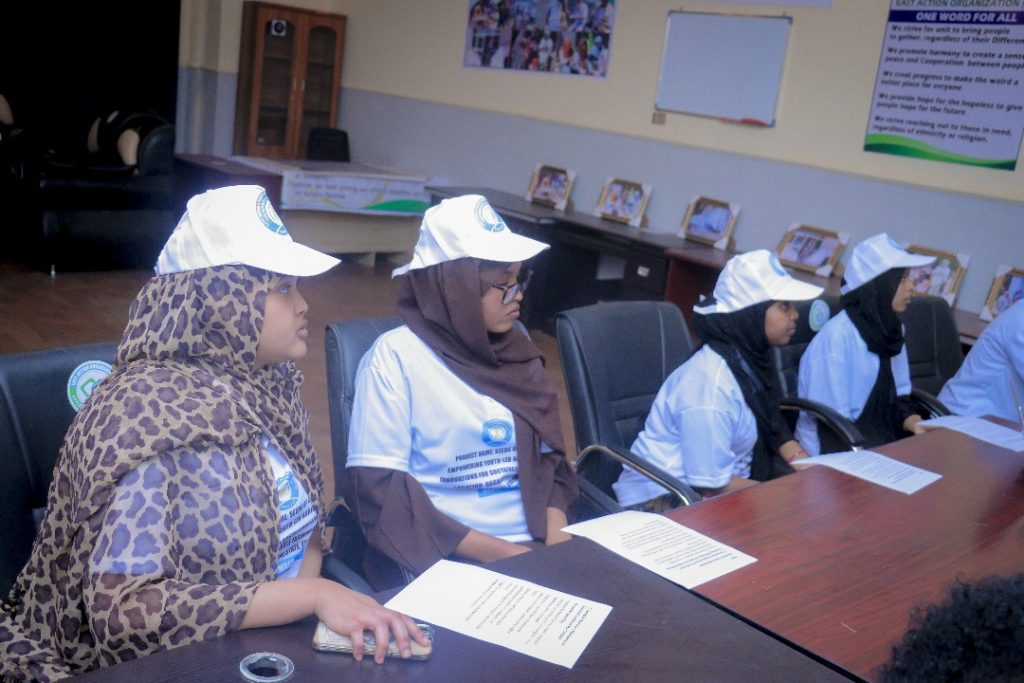
on December 15-20/2024, the East Action Organization (EAO) conducted a one-day training program titled “Empowering Youth Advocates: Training for Leadership in SRH and GBV Prevention”. The training aimed to equip youth and adolescents with the knowledge and skills to advocate for sexual and reproductive health (SRH) rights and lead initiatives to prevent gender-based violence (GBV) in their communities.
EAO has a proven track record of working in family health, with key initiatives such as the distribution of dignity kits to vulnerable women and girls during emergencies, reproductive health education, and psychosocial support for GBV survivors. These experiences have established EAO as a trusted partner in community health and gender empowerment, positioning it to lead impactful youth-focused initiatives like this training.
This program aligns with EAO’s mission to empower young people as agents of change, ensuring they play a pivotal role in fostering communities where SRH rights are upheld, and GBV is actively addressed.
2. Target Group
The training targeted youth and adolescents aged 15–24 from diverse backgrounds. A total of 25 participants (17 females and 8 males) were selected from various communities across Jigjiga. Selection criteria included a demonstrated interest in youth advocacy, leadership potential, and a commitment to implementing the skills and knowledge gained in their respective communities.
3. Organizer and Venue
t training was organized by the East Action Organization (EAO), a Jigjiga-based NGO committed to empowering youth and women through capacity-building, advocacy, and community engagement. The event took place at EAO’s main office, which provided a collaborative and supportive environment for participants to learn and engage.
4. Training Activities
the training was delivered through interactive sessions facilitated by experts in SRH and GBV prevention. The sessions were designed to maximize participant engagement and practical learning. Key activities included:
- Session 1: Introduction to SRH rights and GBV concepts.
- Session 2: Leadership and advocacy skills tailored for youth.
- Session 3: Practical strategies for community engagement and mobilization.
- Group Activities: Role-playing exercises to address GBV cases and explore real-world scenarios.
- Discussion: Sharing personal experiences and identifying common challenges within their communities.
Participants were provided with comprehensive training materials, including booklets and brochures, to reinforce their learning.
5. Outcomes and Impact
The training achieved significant results:
- Participants demonstrated increased awareness of SRH rights and GBV prevention strategies.
- Youth advocates developed actionable community plans to address GBV and promote SRH rights.
- Feedback from participants highlighted their enhanced confidence and readiness to take leadership roles in their communities.
6. Challenges and Lessons Learned
- Challenges: Some participants struggled with technical terms related to SRH and GBV, requiring additional clarification from facilitators.
- Lessons Learned: Simplifying complex concepts and incorporating more interactive activities helped improve participant engagement and understanding. Future training sessions will build on this feedback to enhance accessibility and impact.
7. .Conclusion and Recommendations
Conclusion and Recommendations
The training successfully empowered youth advocates with the skills and knowledge to lead SRH and GBV prevention efforts in their communities. Participants expressed enthusiasm for applying their new skills and requested follow-up sessions to deepen their understanding and sustain their advocacy work.
EAO’s experience in family health, including its notable work in dignity kit distribution and reproductive health education, provided a solid foundation for the success of this initiative. These efforts have not only strengthened EAO’s credibility but have also reinforced its commitment to fostering sustainable community-driven change.
Moving forward, EAO recommends:
- Organizing refresher trainings to maintain momentum and expand the participants’ skillsets.
- Establishing a youth advocate network to facilitate collaboration and knowledge-sharing.
- Exploring partnerships to scale up the initiative and reach more communities.
This program exemplifies EAO’s mission to empower youth and underscores its capability to drive meaningful change in SRH and GBV prevention.
8.Evidence and Photos